
A Medical Malpractice Attorney Discusses What to Expect in a Medical Malpractice Case

There is great truth in the age-old adage that your health is wealth. Your life literally depends on it, and so there is a high premium on getting the appropriate and best suited medical care possible for you. What happens, though, if the trust you afforded your doctor was broken? What if, instead of making you better, they inadvertently make you worse because of their negligence?
Questions You and Your Slip-and-Fall Lawyer Should Answer When Suing

Have you been thinking of filing a lawsuit for injuries you sustained after slipping on the floor of a business establishment? If yes, then you need an Oklahoma City slip-and-fall lawyer to help you determine if you have a legitimate case and how to build it.
The Importance of a Car Accident Lawyer and How They Can Help in Your Case

When people become involved in a car accident, the primary concern is to make sure that the parties involved are not grievously or fatally injured. Tending to their health and well-being is understandably the foremost consideration and concern.
How Negligence Impacts Lawsuits

Unfortunately, most people are unaware of the fact that it is now possible to file a lawsuit and seek compensation for injuries resulting from someone else’s negligence. The amount of physical, emotional, and financial strain resulting from such negligence warrants a legal claim, and individuals/corporations alike should be held accountable for their actions. What is Negligence? Whether you’re dealing cases of improper medical practice, a car accident, or your run of the mill case of “slip and fall,” negligence is the term used to hold a party liable for events leading up to your injury. This legal theory requires some burden of proof in many cases and claims involving injury. Effective legal representation is crucial in these cases, for the main reason that proving negligence is a complex process that requires some level of expertise. In principle, any careless act that results in injury to another is considered negligent behavior. It is crucial to keep in mind that whether you choose to settle the case out of court, or if you have enough proof to go to trial, the evidence of this legal principle needs to be airtight. How to Prove Negligence If you do decide to go through with your lawsuit, then there are four critical elements you need to satisfy to prove, beyond a reasonable doubt, that the defendant is liable and expressly responsible for negligent behavior. These four factors include duty, breach, causation, and damages. Let’s look at them in a bit more detail, shall we? Elements of a Negligence Claim Legal Duty This is usually the easiest to prove, especially where corporations are concerned. The concept of legal duty indicates that you should be accorded some level of care, as a bare minimum, by the person liable of negligence. An example of statutory responsibility is an injury you sustain at the workplace due to poor working conditions. The legal duty is a prevalent factor when it comes to proving cases dealing with medical malpractice suits, where doctors abuse a patient’s right to efficient medical care. Duty can also be proven if the injury you sustain is a result of an accident, where the accused flouts traffic rules and causes harm. There are several other examples, but the crux of it is, if you have some professional relationship with the accused, then they are bound by the element of legal duty. Duty Breach After establishing legal duty, you will need to prove, in totality, that there was, in fact, a breach. This is achieved through a practice that shows how an ordinary, responsible party (a reasonably prudent person) would have responded under the same circumstances. This legal standard sets a statute to how the defendant ought to have responded in that situation. It also proves why this response constitutes negligence. Essentially, the idea behind establishing a breach of contract is to prove that the defendant’s actions directly resulted in injury. Causation The next element on how to prove negligence involves a process that determines actual bodily harm. Proving negligence is one thing, but for you to get any form of compensation, then you must prove, conclusively, that this lack of forethought caused the injury in question. There has to be a direct link between your injury and the defendant’s negligent behavior. Most plaintiffs are known to try and increase compensation by tying unrelated incidents into the lawsuit, which is both ill practice and dishonest. Note that you can be prosecuted for lying under oath, so ensure any injury you suffer truly reflects negligent behavior and isn’t an attempt to defraud someone else. There is also the consideration of “unforeseeable” circumstances. This occurs when proof indicates that the defendant couldn’t have anticipated the injury caused, and hence couldn’t have acted any differently. Random acts of nature and other variables may tilt the scale in the defendant’s favor. Damages The last element of how to prove negligence plays on the court’s ability to render compensation to you, as the plaintiff for the injury resulting from the defendant’s negligence. This is done after satisfying that, indeed the injury was a result of negligence. For the most part, this compensation is monetary, and it takes into account resultant property damage or medical expenses that you may have incurred. Bottom Line Trying to pursue a personal injury case can be difficult without the right kind of professional assistance, especially if you’re going up against a corporation. You need to find a litigator who is both experienced and has the industry expertise to get you the compensation you deserve! For more information contact one of our highly qualified Attorneys at 580-224-0900 for a free consultation.
How to File a Wrongful Death Lawsuit

When someone is injured through negligence or malicious intent, although very difficult, they can file a personal injury lawsuit on their own. But if the act in question results in death, they cannot. Then recovery for damages falls upon the relatives of the deceased and the estate. In which case grief stricken family members can suddenly find themselves confronted with having to learn how to file a wrongful death lawsuit. The first thing you have to do is act fast, no matter how emotionally distraught you might be. This is because most states, like Oklahoma, have a strict two year statute of limitations. Your first step is to retain an exceptionally good lawyer. This is because wrongful death lawsuits can result in exceptionally high settlements, often millions of dollars. And when the lawsuit involves millions of dollars, you can be certain that the insurance companies will show up with the best lawyers in the state. So do some research. Ask any lawyers you might know for recommendations of law firms that specialize in wrongful death lawsuits. Talk to some of them; consultations are often free. But remember you are up against the statute of limitations and cannot afford to procrastinate. Once you have made your choice, follow all your lawyer’s instructions carefully. Remember that you do not have to know how to file a wrongful death lawsuit. Your lawyer will have all the answers before you walk in the door. All that you have to do is listen carefully, take notes and follow their instructions. However; it is a good idea to familiarize yourself with the matter you will be discussing. In the first place this is a civil case not a criminal case. In a criminal case the burden of proof is “beyond a reasonable doubt.” In a civil case the bar is much lower. It requires only “a preponderance of evidence (51%). While each state has different rules, most of these rules are derived from Lord Campbell’s Act of 1846. With the rapid growth of railroads in the 1830’s, people were becoming alarmed with the number of deaths attributed to the railroads’ disregard for public safety. So the British Parliament passed the act making it possible to sue for damages as a result of negligence. Negligence requires proof that some party had a duty or responsibility to avoid injury. Then you must prove that the party failed to comply with that duty. And finally you must prove that this failure was the cause of injury. It may sound simple, but there is much more to it than that. Oklahoma has one of the more stringent sets of requirements, so it provides a good example of some or the issues you might expect to encounter. First, you have to open an estate. This requires filing paperwork with the probate court, and the paperwork should be filled out by your lawyer. Second, there must be someone to represent the deceased. This is called an administrator or executor, and they are responsible for handling the legal details and distributing the assets. If the deceased had a will and named an executor, the matter is settled. If not one must be appointed. In many states, such as Oklahoma, only the executor can file a wrongful death lawsuit. So far that is the easy part. Now things can become more time consuming. Before your two-year window slams shut, you must file insurance claims with all relevant parties, including the insurance company of the deceased. Then there are the insurance companies of the at fault parties. In the case of an automobile accident it might be just the at fault driver. However, if a commercial vehicle is involved, was the driver at fault for going through a stop sign, or is it the boss’s fault for not replacing defective brakes? Now you have two companies. And if the boss rented the vehicle you now have three. In a medical malpractice case, there is no telling how many companies might be involved. Trials can become extremely costly. Often legal fees can eat up the entire settlement. But trials are also costly for insurance companies. Lawyers experienced in these matters have a pretty good idea of about how much the amount of the settlement will eventually be. Therefore, both sides will try to avoid going to court. They will negotiate. They will haggle. They will make offers and demands. It might take years, but eventually, a good lawyer will come up with a standard settlement. And a good lawyer will know that insurance companies like to stall. So, you do not need to know how to file a wrongful death lawsuit. You only have to find the best law firm, and then do exactly what they say. Little Oliver Gallagher has a proven track record in Wrongful Death cases and our attorneys are here to help you through this extremely difficult time. For more information contact one of our highly qualified Attorneys at 580-224-0900 for a free consultation.
Advocate for Your Health with the Help of Medical Malpractice Attorney

Note these alarming facts: The Journal of American Medical Association (JAMA) counts negligence—right behind cancer and heart disease—as the third leading cause of death in the United States. In 2012 alone, over $3 billion was paid out for medical malpractice, which averages at a payout every 43 minutes.
When Should You Consult a Personal Injury Attorney?
Personal injury is a phrase that may seem rather vague and mysterious to a layperson, possibly even conjuring visions of a court hearing, similar to something you’d see on TV. But the truth is: once you strip it down to its bare bones, personal injury isn’t all that difficult to understand, and it doesn’t necessarily have to lead to an actual trial either. In fact, the American Bar Association maintains that most cases get settled before trial, with only a small percentage of them actually going to court.
Motorcycle Accidents and Helmet Laws

Motorcycle riding is fun. But it is also dangerous, which is probably part of the reason that makes it so much fun. Most motorcycle accidents occur because the driver did not see the motorcycle. Experienced riders understand this, and they take every possible precaution. They stay sober and alert, and they always expect the unexpected. Just because an approaching car does not have a flashing left turn signal does not mean that the driver is not going to make a left turn in front of you. In motorcycle accidents riders can be seriously injured. And the first question is always, “Was the rider wearing a helmet?” Oklahoma, like many other states, has a “comparative fault” rule, which can severely limit the rider’s ability to collect compensation. In the above case involving an illegal left turn, this means the rider can be found partially at fault for not wearing a helmet. Unfortunately, many judges, jurors and journalist buy into the argument that helmets do prevent injuries. And there are numerous studies that attempt to prove this point. But the overwhelming number of these studies are bought and paid for by the insurance lobby, the medical lobby, or the people who manufacture and sell motorcycle helmets. Should you be involved in a lawsuit where you were not wearing a helmet be prepared for a fight. The battle will be fought with statistics, and the insurance company can afford the legal equivalent of a navy SEAL team. So you cannot afford to walk into court with your family lawyer or a slip-and-fall all-purpose personal injury lawyer. You will need a battle hardened veteran motorcycle accident attorney. This will be someone who is familiar with the highly priced but also highly prejudiced “expert” studies and who has experience in exposing the flaws in the testimony of so-called expert witnesses. All but two states have laws regulating motorcycle helmet use. And these laws were not passed without transportation committees listening to thousands of hours of testimony presenting statistics on both sides of the issue. You can compile lists of numbers and claim that they prove whatever you want them to prove. However, outside of their surrounding context statistics are meaningless. For example, in 2003 Pennsylvania modified the motorcycle helmet law to allow mature and experienced riders to ride without a helmet. In less than a year the insurance and medical lobbies were producing statistics that showed that there was an increase in motorcycle fatalities. But under scrutiny it was demonstrated that there was also a significant increase in the number of registered motorcycles, as well as an increase in the number licensed motorcycle riders. Furthermore, Pennsylvania motel owners noticed an unusually large number of motorcycles with New York license plates in their parking lots that summer. So, yes, the number of motorcycle fatalities may have increased. But when you take into account how many more people choose to ride motorcycles in states, like Pennsylvania and Oklahoma, that do not mandate helmets and how many motorcyclists from out of state choose to vacation in helmet free states, there is no increase in the percentage of motorcycle fatalities. It is also claimed that states with no helmet laws have a higher percentage of fatalities than states with mandatory helmet laws. But there is a third category. These are states with modified helmet laws. These laws require helmet use by certain groups of riders, usually based on age and riding experience. When the states with mandatory helmet laws are compared to states with modified helmet laws, the difference in fatalities becomes insignificant. Also, motorcycle helmets are tested on human head forms for a 13 mph impact. But human head forms do not operate motorcycles at 50 mph. That makes a big difference. And I think I heard it put best at a transportation committee meeting in the Virginia House of Delegates by a member who said: “I would like to remind this committee that at our last meeting we heard compelling expert testimony that at 50 mph a motorcycle helmet becomes a 200 pound bowling ball attached by a strap to your neck.” So the evidence goes both ways. Ultimately, helmet choice should be left to the individual, as it comes down to what Mr. Justice Brandeis called “The right to be let alone.” Nevertheless, if you were involved in an accident without a helmet, the studies are manipulated to favor the insurance companies. But the facts often tell a different story. You need to retain an experienced motorcycle accident attorney who understands and can demonstrate the difference. For more information contact one of our highly qualified Attorneys at 580-224-0900 for a free consultation.
Motorcycle Accident Advice
What You Need to Know About Motorcycle Accidents A motorcycle accident can be a very traumatizing and painful experience. In fact, motorcycle accidents are some of the most serious types of accidents as they often result in severe injuries and an increased number of deaths. The chances of survival for the rider are greatly reduced if the crash happens at a high speed. This is mainly because, unlike cars, motorcycles offer very little protection for riders. Occupants of the car involved in a crash will often come out unscathed while the motorcycle rider may be killed on the spot. Establishing negligence after a motorcycle accident can be a complex process which is why it is very important to retain the services of a personal injury attorney. If you, as the rider, were seriously injured in a motorcycle accident, then a personal injury attorney will help clear you of any fault and ensure that you are fully compensated for your damages and losses. Also, if you lost a loved one in a motorcycle accident, it is imperative to contact an attorney to ensure you get the justice you deserve. Common Types of Injuries in a Motorcycle Accident Broken Bones: Fractured bones are very common in road accidents. This is especially so in motorcycle accidents. Fortunately, most broken bones usually heal in a month or two without any major complications after treatment. Head and Brain Injury: In a motorcycle accident, there is a high risk of the rider sustaining head injuries. Even a low-speed collision is enough to cause a serious head injury. This is why it is very important to always wear a helmet. Studies have shown that it reduces the chances of head and brain injuries by 70%. Depending on the impact of the collision, even with a helmet, you may sustain traumatic brain injuries which are among the most serious types of injuries. The risk increases tenfold when you don’t wear a helmet. These injuries usually affect one’s cognitive, physical, and even emotional abilities. Whiplash: Sudden acceleration and deceleration cause the rapid movement of a person’s neck resulting in whiplash. Spinal Cord Injury: The spinal cord is one of the most important parts of your body but it is also one of the most delicate. If your spinal cord suffers any damage, it can result in partial or permanent paralysis. Other types of common injuries include broken neck, soft tissue injuries, amputations among others. What Steps to Take After a Motorcycle Accident? After being in a motorcycle accident, there are various things that you need to do and to avoid in order to safeguard your rights and ensure you get the necessary assistance. Seek Medical Help Your health and well-being should always be your top priority no matter what. Hence, ensure that you get the necessary medical treatment after an accident. You should be thoroughly examined by a medical professional even if you don’t have any noticeable injuries as this can potentially save your life. Also, your medical reports will provide crucial evidence in proving the extent of your damages. Contact the Police It is imperative to call the police immediately after being involved in a motorcycle accident. When filing a claim, you will need to prove how the accident happened and a police report will provide the necessary evidence that you need. Don’t Admit Fault or Apologize In an accident, even if the circumstances surrounding the accident are unclear, you should never give even the slightest hint that you are in any way at fault. This can seriously affect your case. Hence, you should never apologize or give out more information than required. Collect Evidence When filing your claim, you will need as much information as possible to support your case. Hence, while still at the scene, you will need to take photos and videos of the scene, note down in detail your account, and collect names and contact information of any available witnesses. Contact the Insurance Company You will need to inform the insurance company of the incident and your intention to file a claim. It is important to have an attorney at this stage as your attorney will help to avoid any chances of you saying something that may jeopardize your claim. Get in Touch With a Motorcycle Accident Lawyer As Early As Possible You should always keep in mind that insurance companies are businesses and they rarely have your best interests at heart. Their main aim is to pay the least amount of compensation or have to pay none at all in order to protect their bottom line. They will have a team of expert lawyers dedicated to discrediting your claim. You have minimal chances of getting fair compensation when you don’t have a lawyer. An attorney will help protect your rights, help you collect the necessary evidence to support your case, and fight hard to ensure you are fully compensated. What Damages Can I Recover After a Motorcycle Accident? After establishing the full extent of your injuries and losses, your attorney will negotiate with the insurance company and demand full compensation. They will also include other damages you might not have been aware that you are entitled to. If the insurance company fails to comply, your attorney will be prepared to take your case to trial and fight for your rights. The following are some of the damages you can recover: Past, present, and future medical expenses Lost income Loss of consortium Loss of earning capacity Pain, suffering, and mental anguish It is worth noting that most professional personal injury attorneys charge their fees on a contingency basis. This means that you only have to pay after they’ve successfully secured fair compensation for you. A certain percentage is deducted from your compensation. Therefore, you have nothing to lose but a lot more to gain when you hire a lawyer. Little Oliver Gallagher personal injury attorneys are here to help guide you through your motorcycle accident case. For more information contact one of our
A Brief Look at the Different Kinds of Car Accident Liabilities
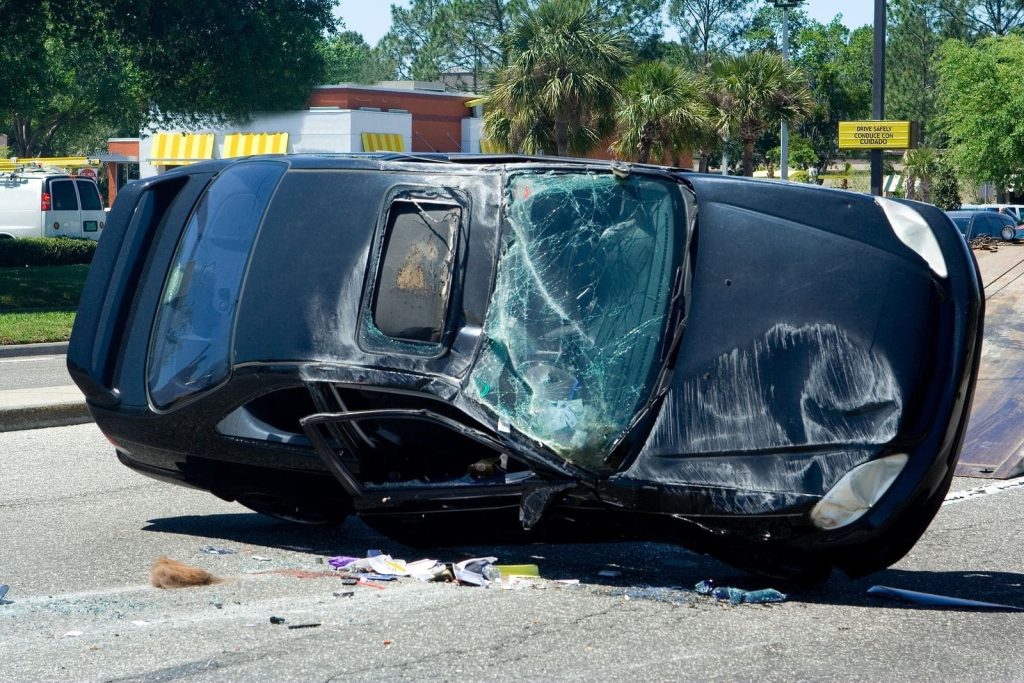
Every time you get behind the wheel and drive on the road in Oklahoma or elsewhere, you become responsible for the safety not only of everyone in your vehicle, but also of other drivers as well as pedestrians. Indeed, it is such a huge obligation that you carry upon your shoulders when you become a driver.